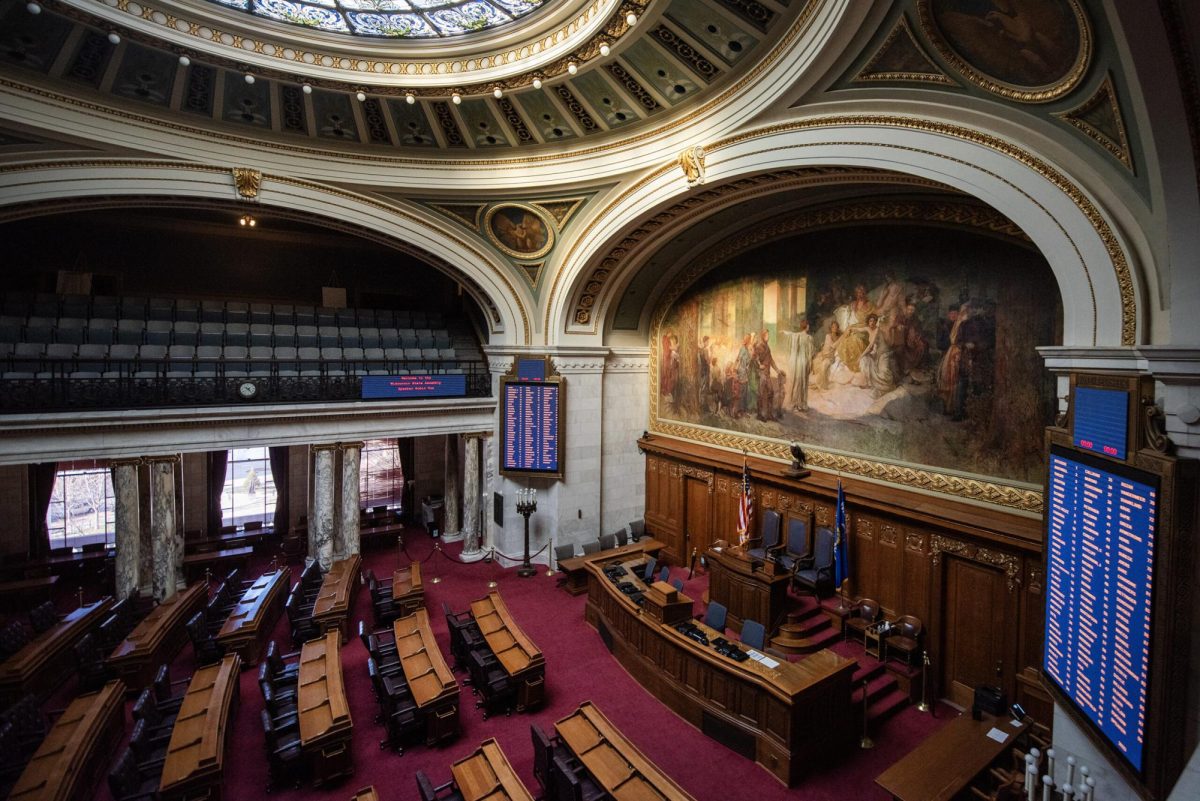
The Wisconsin State Assembly unanimously passed a pair of bills Feb. 20 that pave the way for the Department of Natural Resources (DNR) to begin using over $130 million that was initially set aside in the 2023-25 state budget for the cleanup of PFAS chemicals.
“Today was a win for Wisconsinites across the state,” 54th Assembly District Rep. Lori Palmeri (D-Oshkosh) said. “The $132 million dollars that has sat untouched for over 900 days will hopefully be released by the end of this session. The Senate will still need to take up these bills, but today we passed meaningful legislation for families and those impacted most by these forever chemicals.”
According to the Environmental Protection Agency (EPA), PFAS, known scientifically as perfluoroalkyl and polyfluoroalkyl substances, are long-lasting synthetic chemicals that have harmful health effects because they do not break down easily.
PFAS resist water, grease and stains and are found in non-stick cookware, waterproof clothing, food packaging, cosmetics and firefighting foam. Exposure to PFAS has been linked to cancer, liver damage, thyroid disease, reduced immunity and developmental issues.
Palmeri said that PFAS impacts everyone, and the chemical doesn’t discriminate.
“We often speak to the concerns for children and pregnant women, but men are impacted by this issue as well,” Palmeri said. “PFAS is linked to lower sperm count, reduced motility, low testosterone and testicular cancer.”
Palmeri said that over 120 Wisconsin communities have confirmed PFAS toxicity in their water.
“PFAS has been widely used since the 1950’s, and is toxic at infinitesimally low levels,” Palmeri said. “Think a drop in an Olympic sized swimming pool. No other chemical is measured in such small units.”
Assembly Bill 130 exempts five categories of people from liability of possessing or discharging PFAS into the environment. This includes holding a license or permit to discharge PFAS, using them in training for emergencies (for groups like fire departments), using them at waste disposal facilities and exempts people from liability if the chemical was used in the past on a property that they are owning, leasing or managing.
Assembly Bill 131 establishes grant programs for municipalities around the state to test and clean up PFAS contamination that is deemed a threat to public health. The bill allocates $132.3 million from a segregated PFAS fund to implement new programs to fight environmental contamination, including $79.5 million for a community grant.
Part of the legislation requires the DNR and Universities of Wisconsin Board of Regents to enter a memorandum of understanding to study and analyze the cost and effectiveness of different methods of treating PFAS.
State Sen. Eric Wimberger (R-Gillett) said that the bills, which both passed 93-0, that he co-authored with Rep. Jeff Mursau (R-Crivitz) was a landmark bill that helps communities combat PFAS contamination across Wisconsin.
“Today’s vote in the Assembly is the result of compromise and negotiations between the Legislature, the Governor and impacted communities from across Wisconsin,” Wimberger said. “With this vote we’re one step closer to getting victims of PFAS the protections they deserve and communities suffering from PFAS the help they need to clean up this mess.”
Palmeri said that she wanted to thank Mursau, Wimberger, the DNR and Gov. Tony Evers for their work with the legislation.
“Compromise means actually sitting down to have hard conversations and meet in the middle,” Palmeri said. “In a week that has felt like political showmanship, this deal is a product of the work that can, and should be done in this building.”
Evers vetoed a Republican-led bill in the last assembly session over concerns that it wouldn’t hold polluters accountable, and the $125 million that was initially set aside for PFAS in the 2023-25 state budget grew by over $7 million due to accumulated interest because it was unused.
Palmeri said that PFAS contamination was one of the issues that drove her to run for state office.
“I am proud to have been a small part in beginning to address this issue and get funding out to our communities,” Palmeri said. “While the fight isn’t over, I am proud of what we accomplished here today, and I am hopeful this legislation will make it to Evers’ desk before the end of this legislative session.”