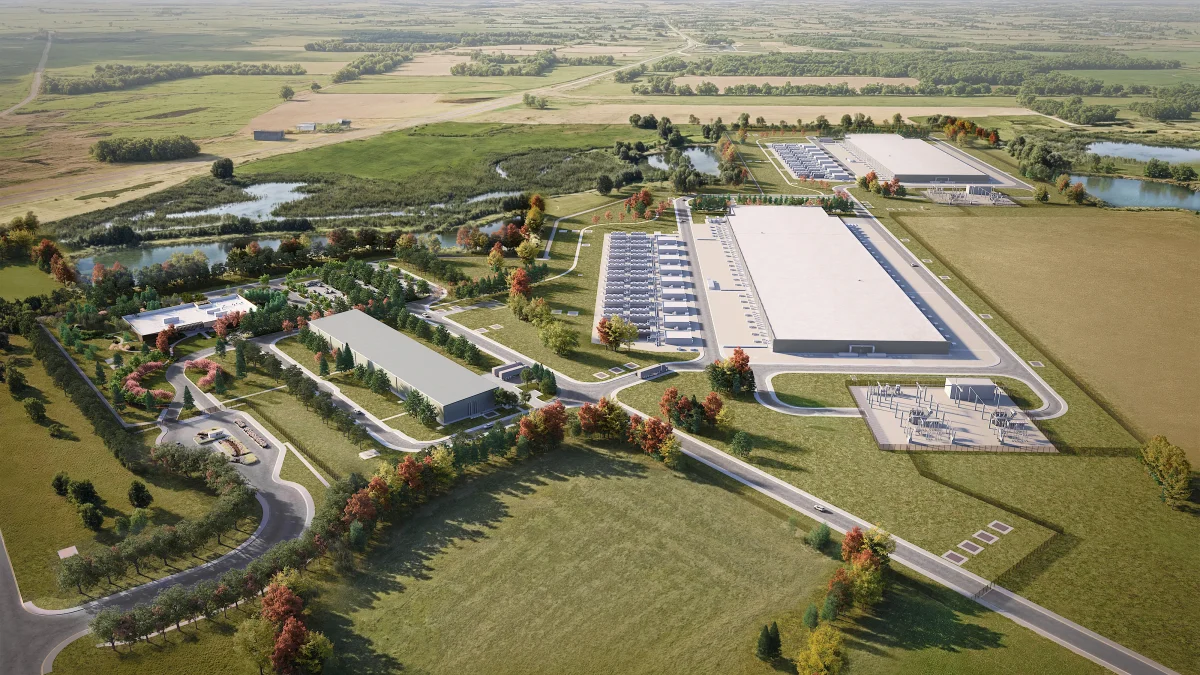
As Wisconsin lawmakers move to regulate the rapid expansion of artificial intelligence data centers, experts warn the projects could strain water resources and energy grids in the Fox Valley.
UW-Oshkosh’s Sustainability Director Brad Spanbauer said the pros don’t outweigh the cons for AI data centers.
“AI data centers in Wisconsin, driven by massive AI projects, are straining regional water resources and energy grids, placing them under the scrutiny of the Great Lakes Compact,” Spanbauer said. “While these ‘hyperscale’ projects promise economic growth, they require massive amounts of water for cooling and energy, raising concerns about potential violations of the Compact’s strict water-diversion rules, which restrict taking water outside the Great Lakes Basin, and highlighting a regulatory gap regarding high-volume water use.”
According to the Wisconsin Examiner, the Wisconsin State Assembly passed Assembly Bill 840 by a 53-44 vote on Jan. 20 which allows the regulation of AI data centers being built in Wisconsin.
Spanbauer said due to high water and energy consumption, energy bills for Wisconsin households may increase.
“The Wisconsin grid was already stressed to meet demand,” Spanbauer said. “Adding more fossil fuel-powered infrastructure to supply energy to the data centers is only going to exacerbate growing problems.”
Andrew Kell, Renew Energy’s policy director, said Wisconsin is producing 17.4 gigawatts of energy and a large-scale data center uses around four gigawatts of energy.
“The electricity usage over the course of a year, what they’re projecting, it’s like the city of Milwaukee,” Kell said.
A doctoral student at the University of Wisconsin-Madison, Gabriel Shapiro, said energy usage is directly linked to water usage.
“It turns out that 90% of the data center’s water use comes indirectly from the electricity that it requires, and that by putting in these closed loop systems, it cancels out those benefits, because they’re actually using way more electricity,” Shapiro said. “These closed loop systems have to be kept at high pressure all the time to be able to keep the closed loop so it’s directly connected.”
Shapiro said there are benefits from data centers shutting down operations for a few hours out of the year to pull down the strain on the energy grid.
“Gas plants don’t have to get built to be able to meet the demand if they can just agree to be for a small portion of the year,” Shapiro said.
Kell said Wisconsin Gov. Tony Evers has a goal to get zero carbon emissions by the year 2050.
“It’s going to take a lot of investments,” Kell said. “It’s going to take a lot of policies and economic transition to make that happen.”
Shapiro said there is creative thinking when it comes to adding more ways to get towards this goal by 2050.
“There’s ways to mix farming with solar, grazing sheep underneath the solar panels,” Shapiro said. “There is degraded land that is not being farmed, where the solar should go. There’s toxic waste sites, landfills that can be covered and highway medians.”
Shapiro said the Fox Valley can take action by crafting safe guards surrounding the data center boom.
“The Fox Valley could center itself as being a leader and saying, ‘we want to say that we’re going to do it our way,’” Shapiro said. “Essentially, not letting these big tech companies kind of trample in and set up on their own terms, but instead, here’s a set of requirements.”