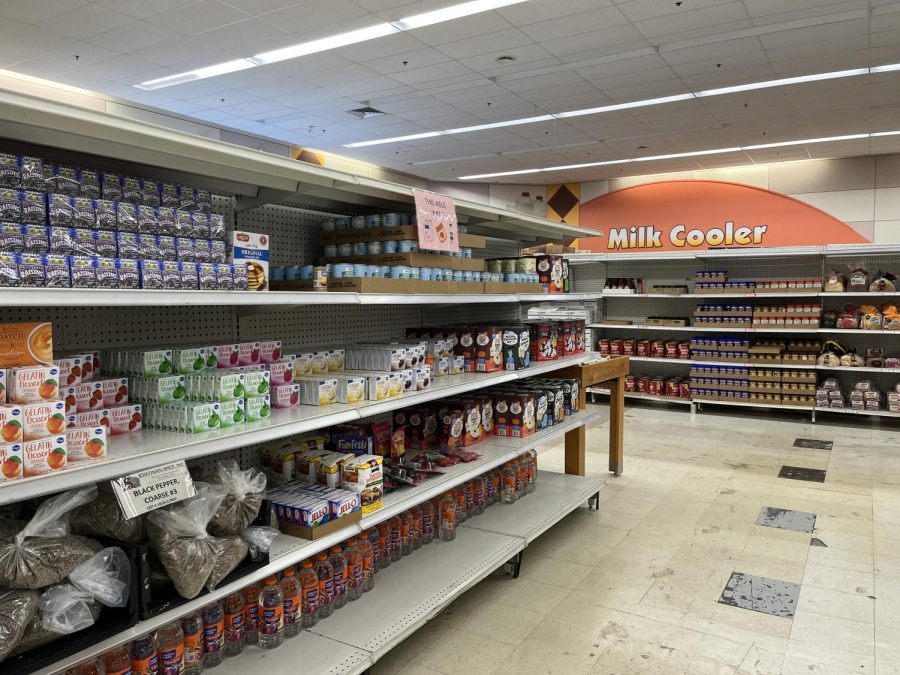
As the national food insecurity rate rises across the U.S., Wisconsin food pantries are seeing higher numbers of families and students using the services to stay financially afloat.
The Oshkosh Area Community Pantry (OACP) reported in 2025 that it served 4,523 households (a 107% increase from 2021), distributing nearly 2.2 million pounds of food to its guests.
Purdue researchers define food insecure Americans as not being able to afford a balanced meal and occasionally having to skip a meal or eating less for financial reasons.
A Purdue University survey found that about 14% of U.S. households reported food insecurity in 2025, which has increased since 2024.
It’s projected that roughly 2.4 million Supplemental Nutrition Assistance Program (SNAP) recipients could lose benefits due to new work requirements in President Trump’s One Big Beautiful Bill.
OACP Program Manager Elizabeth Ahnert said they partner with six pantries in Winnebago County to share food between each other so if one location has extra, they’ll send it to another pantry experiencing higher volumes.
“Anybody that is a partner agency of Feeding America Eastern Wisconsin or TEFAP, can share product corresponding to those programs with other agencies who are also partners,” Ahnert said.
Over the last four years, Ahnert said the leadership team has grown by two people, but the number of people they serve has doubled.
“Everything’s expensive,” she said. “People are trying to make ends meet and we are seeing the demand continue to rise.”
Matthew Caine of Oshkosh Student Government food pantry said a growing number of students have been using it, increasing by 100 students each month for the last three months of spring.
“We had an entire week off in March and it was still 400 [students] compared to 200 from just two months ago,” Caine said.
During UWO’s spring break, Caine was surprised to see how many students still visited the pantry within the few days it was open.
“Over break alone, we had a record of 63 uses and that’s just never happened,” Caine said.
Sophie Meiners, a student at UWO who uses the food pantry regularly, said she recommends the resource to students at her campus job working for the READ Center as a peer academic coach.
“Living on my own definitely makes you have to be a bit wiser with your spending, especially now that I don’t have a meal plan,” Meiners said.
She said that even at her school clinicals she’s seeing more students who struggle with food insecurity when trying to get some decent food without breaking the bank.
“Having the resources on campus is really helpful because you can get some nutritious food from the pantry when trying to pinch every penny,” she said.
Ahnert said each day OACP guests and families may be facing challenges in their life, but she’s happy that she can make a difference.
“At the end of the day, I get to rest my head knowing I made an impact on somebody’s life,” she said.