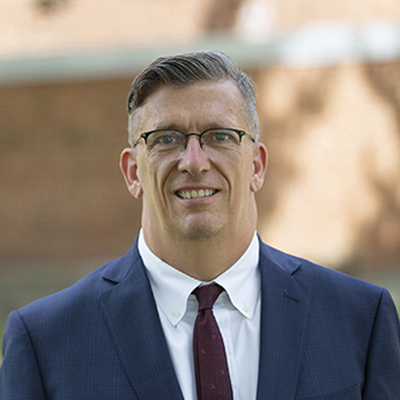
The Universities of Wisconsin Board of Regents appointed Robert Brinkmann as chancellor of UW-Stevens Point on Feb. 25, making him the 16th person in the school’s history to hold the position.
This motion was commended by Board of Regents President Amy Bogost who said she is excited to welcome Brinkmann to the university.
“Brinkmann brings a lifetime of leadership in higher education and specifically sustainability and natural sciences,” Bogost said. “We owe a debt of gratitude to the dedicated committee of Regents, campus members and local partners who worked relentlessly to bring us a leader who so deeply cares about our campus and will ensure UW-Stevens Point’s environmental legacy isn’t just honored but will have a resilient future for the university and community.”
Brinkmann has contributed to many institutions throughout his tenure, including the University of Southern Florida, National Cave and Karst Research Institute (New Mexico), Hofstra University (New York), and most recently, Northern Illinois University as the dean of liberal arts and science. He also graduated from UW-Milwaukee, but his origin in natural sciences and his start at higher education began at UW-Oshkosh.
Brinkmann said that UWO had a big impact on him.
“UW-Oshkosh was perfect for me,” Brinkmann said. “I moved into Donner Hall and found a great group of friends. In my home department of geology, I found a great group of students and faculty who were so committed to the environment and learning about the history of the planet. The student-focused approach at UWO stayed with me through my career and helped me become the person I am today.”
Brinkmann will be officially installed as UWSP’s 16th chancellor on July 1.
Last spring, he was one of four candidates to become UWO’s chancellor, losing out to Manohar Singh.
When Brinkmann spoke at UWO’s open forum on his goals for the university last year, he said that developing curriculum and student experience is essential to better integrate UWO for everyone.
“The world is changing all around us, and we need to do a better job developing curriculum that matters to our students and matters to the community,” he said.
During his time at NIU, the university raised over $25 million in five years, with Brinkmann highlighting his proficiency in engaging with alums and building a fundraising team. He said that NIU’s financial deficit was between $17 million and $24 million.
“The president asked me, one of the first years I was there, to be part of a three-person group to develop a plan for how to deal with that deficit,” he said. “We spent a year looking at the budget, as well as working with all of the stakeholders across campus to try to develop appropriate planning for how to deal with the deficit.”
Brinkmann said taking steps to push beyond structural deficit is crucial for the university to move forward positively and craft a vision of itself.
“Budgeting is not accounting in that budgeting is really an expression of your values as an institution,” he said. “You build your budget based on what you want to do and what your aspirations are to do. The accounting is what you have at the end of that, and it tells the story of whether or not you were able to achieve your goals through the budgeting work you did in planning for the year ahead. I think it’s really important to be intentional with strategic planning to make sure that you build a budget that makes sense for where you want to go as an institution.”
Brinkmann said he doesn’t only have experience engaging with the community but also with public officials. He developed experience working with state governments during his time at Hofstra University, which was during the Great Recession of 2008.
“I was asked to be part of the economic development planning team for Long Island,” he said. “We had to work with a team to develop planning around economic development to drive the economy forward … we helped bring millions and millions of dollars of investments to Long Island.”
He said they focused on rebuilding industries in Long Island around sustainability, which included industries transporting and storing food on the island.
“That was a wonderful experience to build that connection with the university, with the private sector and the public sector with the state hopping in,” he said. “We also funded a number of non-profit organizations that were also key to the success of the economy on Long Island.”
Brinkmann said he has a lot of experience working with governmental agencies and congresspeople, which he can bring to the university.
“I know how to work with state organizations,” he said. “I know how to work with federal organizations, local governments to try to enhance support for the university’s initiatives.”